
led heart mirror
A Buyer’s Field Notes on Precision Pin Gauges in 2025 If you’re scanning the market for pin gauges for sale , you probably already know the basics: these little workhorses are the fastest way to verify hole size with repeatable certainty. But the gap between “good enough” and production-grade is wider than it looks. I’ve toured a few gauge rooms lately and, to be honest, what separates a reliable set is the grind, the heat treat, and whether the calibration paperwork actually means something in an audit. What’s moving the market Two trends: smaller diameters and tighter tolerances. Medical device, fuel systems, and precision nozzles are driving sub-1 mm checks with ±1 µm aspirations. Also, buyers want traceability without fuss—QR-coded certificates and ISO/IEC 17025 calibration from the get-go. It seems that even job shops now expect lab-grade documentation. Product snapshot: Pin Gauge (0–10 mm) Origin: No.17, Building 11, Hardware Building Material City, Botou, Cangzhou, Hebei, China. Pin-type plug gauges for measuring small round-hole IDs with high precision. Typical sets in 0.01 mm or 0.005 mm steps. Parameter Spec (≈, real-world may vary) Diameter range 0.20–10.00 mm (custom to 0.05 mm below 0.20 mm) Tolerance grades Class X ≈ ±1.0 µm; Class Y ≈ ±1.5 µm; Class Z ≈ ±2.5 µm Material & hardness GCr15 / AISI 52100, HRC 60 ±2; optional carbide for abrasive use Finish & roundness Ra ≤ 0.05 µm; roundness ≤ 0.5 µm Length & marking 40–50 mm; laser-etched ID; optional QR linked cert Calibration ISO/IEC 17025 traceable cert available, GR&R-ready Process flow (how good pins are born) Material selection → vacuum heat-treatment → centerless grinding → fine lapping → superfinishing → laser marking → 100% inspection. Verification typically references ISO 1938-1 plain gauge requirements and reports uncertainty from a 17025-accredited lab. A quick batch study I saw: 30 pins at 2.00 mm, Class X, mean deviation +0.3 µm, 2σ ≈ 0.8 µm (air comparator). Service life? With proper oiling and sleeves, many shops report 100k+ insertions before any drift shows up. Where they shine Aerospace bushings and hydraulic orifices Automotive injectors, valve-seat checks, turbo oil galleries Medical hypotubes, surgical guides, and micro-molds General QC, toolroom setups, fixture qualification Many customers say the practical win is speed: no warm-up, no fuss—just Go/No-Go confidence. For CAPA-heavy environments, the audit trail matters just as much. Vendor landscape (my quick comparison) Vendor Typical tolerance Calibration Lead time Customization STR Machinery (Botou, Hebei) Class X–Z (±1.0–2.5 µm) ISO 17025 traceable Around 7–15 days Go/No-Go pairs, carbide, TiN Mitutoyo High precision, global stock Factory cert; 17025 via partners Stock-dependent Limited special builds Vermont Gage Class XX/X/ZZ (inch & metric) Accredited cert options Good U.S. availability Broad catalog Meyer Gage Shop-staple tolerances Cert on request Fast for standard sets Core sizes; customs limited Customization and QA Options include carbide pins for abrasive composites, extended-length for deep bores, matched Go/No-Go pairs, and anti-corrosion coatings. Testing typically includes air-comparator master checks, roundness measurement, and GR&R studies per AIAG MSA. One shop told me they cut scrap 18% after switching to Class X pins and locking in a weekly wipe-down + oil routine. Small habit, big payoff. Buying tips Ask for uncertainty on the cert, not just nominal tolerance. Verify reference to ISO 1938-1 and lab accreditation per ISO/IEC 17025. For harsh use, spec carbide or TiN and plan periodic re-cert (6–12 months). If you’re lining up pin gauges for sale for a medical or aerospace audit trail, don’t skimp on documentation. It’s cheaper than rework—always. References ISO 1938-1: Geometrical Product Specifications — Plain limit gauges ASME B89.1.5: Plug/Limit Gages ISO/IEC 17025: Testing and calibration laboratories AIAG MSA (GR&R) 4th Edition
about
led heart mirror
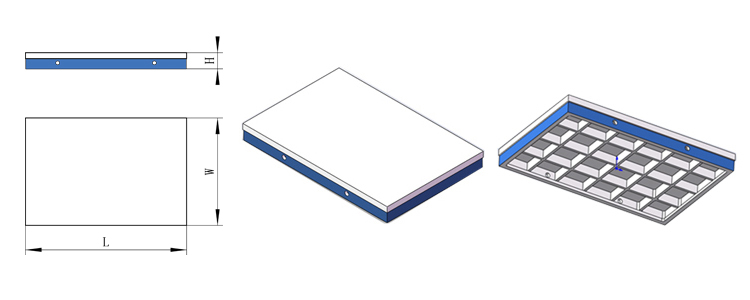
The Importance of Cast Iron Inspection Surface Plates in Quality Control In the realm of manufacturing and precision engineering, quality control is paramount. An essential tool in this process is the cast iron inspection surface plate. Used extensively in various industries, these plates provide a stable and precise reference point for measuring components and ensuring they meet the required specifications. Understanding cast iron inspection surface plates, their characteristics, and their applications can greatly enhance quality assurance processes. What Is a Cast Iron Inspection Surface Plate? A cast iron inspection surface plate is a flat, heavy object made from cast iron, designed with a high degree of accuracy. These plates are typically machined to a smooth surface, allowing for precise measurements of parts and assemblies. The primary purpose of these plates is to serve as a reference plane for various inspection tasks, such as layout, measuring, and checking the alignment of manufactured components. Characteristics of Cast Iron Surface Plates One of the key characteristics of cast iron is its ability to absorb vibration, which contributes to its effectiveness as an inspection tool. This property ensures that measurements taken on the plate are stable and not affected by external disturbances. Furthermore, cast iron surface plates are known for their durability and resistance to wear. This longevity is particularly beneficial in industrial settings where heavy components are frequently handled. Another important feature is the thermal stability of cast iron. Temperature fluctuations can cause materials to expand or contract, potentially leading to inaccuracies in measurements. However, cast iron plates maintain their dimensional integrity across a range of temperatures, ensuring consistent performance in different operating conditions. Applications of Cast Iron Inspection Surface Plates Cast iron inspection surface plates are used in a myriad of applications within manufacturing, machining, and assembly facilities . They play a crucial role in tasks such as cast iron inspection surface plate 1. Quality Assurance Inspection surface plates are fundamental for measuring the dimensions of machined parts and ensuring they adhere to design specifications. This step is vital for maintaining product quality and ensuring that components fit together correctly. 2. Layout Inspection Engineers and machinists use these plates to layout parts for further machining. By providing a flat reference, they can mark out features with accuracy, ensuring that subsequent operations are performed correctly. 3. Calibration of Measuring Instruments Calibration of various measuring tools, such as calipers and micrometers, is critical for maintaining the precision of measurements. Cast iron surface plates provide a reliable standard for this calibration process. 4. Assembly and Alignment When assembling large structures or machines, accuracy is vital. Cast iron plates help in aligning components accurately, ensuring the assembled product functions as intended. Maintenance of Cast Iron Surface Plates Proper maintenance is essential to ensure the longevity and accuracy of inspection surface plates. Regular cleaning and inspection for damage or wear are necessary practices. It is advisable to keep the surface free of any debris or foreign particles that could affect measurement accuracy. Additionally, using appropriate storage methods, such as covering the plate to prevent dust accumulation, can help maintain its condition. If wear occurs over time, some plates can be resurfaced to restore their flatness and accuracy. However, this process should be carried out by skilled professionals, as improper resurfacing can lead to further inaccuracies. Conclusion In conclusion, cast iron inspection surface plates are invaluable tools in the realm of quality control and assurance. Their unique properties, coupled with their diverse applications, make them an integral part of manufacturing processes. By providing stable, durable, and accurate reference surfaces, they play a crucial role in ensuring that products meet stringent quality standards. As industries continue to prioritize precision and accuracy, the significance of these plates will only grow, marking them as essential components in the toolkit of quality assurance professionals. Investing in quality inspection surface plates is an investment in the overall quality of the manufacturing process, leading to greater efficiency and customer satisfaction.
-

High quality industrial productsagement

High quality industrial products
View Details -

Meet the diverse needs of customers

Meet the diverse needs of customers
View Details -

Strict quality control

Strict quality control
View Details -

Top raw materials

Top raw materials
View Details -

Trusted supplier

Trusted supplier
View Details
Our application


news and information
Water Hose Safety Understanding Check Valves Functionality
Understanding the Importance of Water Hose Check Valves A water hose check valve, also known as a n
Valvola a farfalla da 1,5 pollici per applicazioni industriali e domestiche
Valvola a Farfalla da 1.5 Pollici Un Elemento Chiave nel Settore Industriale Le valvole a farfalla s
valve wholesale
The valve industry is a cornerstone of countless sectors, encompassing everything from oil and gas t
 English